Preparing for a competition is not only about the rider’s focus and training: the horse must also be in the best possible condition to perform at its best.
In this first part of our guide, we will focus on horse care and equipment, with particular attention to the needs of show jumping. Part two will instead be dedicated to rider clothing and practical tips to help you enjoy the competition with peace of mind.
Care and management in the days leading up to the competition
A strong performance begins with attentive daily management. In the days before a competition it is important to ensure:
- Balanced nutrition: avoid sudden changes and stick to the usual routine.
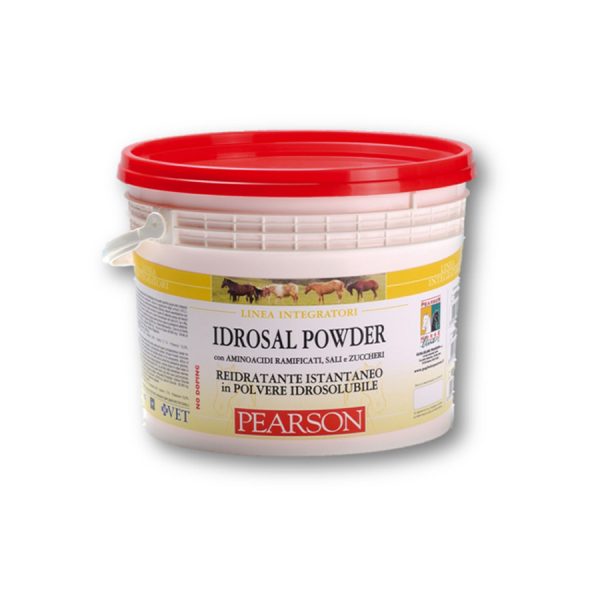
- Constant hydration: essential, especially in hot weather or for horses that tend to drink little. In summer, after training sessions, an electrolyte supplement such as Idrosal Power can be useful to replenish the minerals lost through sweating.
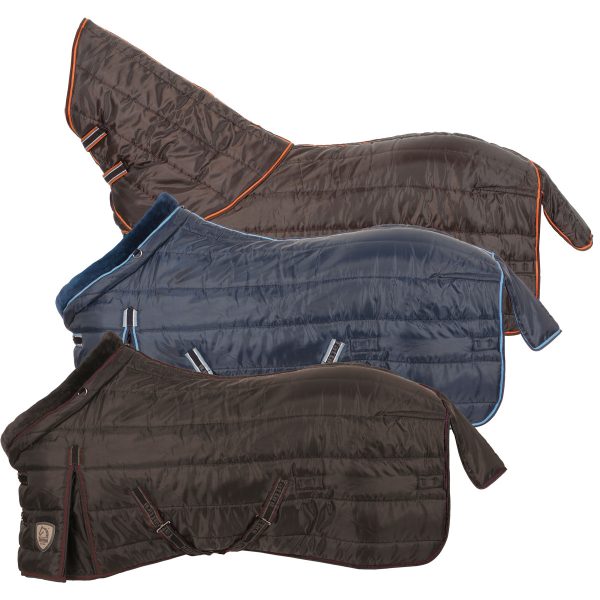
- Clipping in winter: helps prevent chills caused by sweat drying on the coat. After clipping, it is advisable to cleanse the coat with warm water and alcohol, then protect the horse with stable rugs.
- Fresh and correct shoeing: healthy hooves are the foundation of performance and injury prevention.
Grooming and pre-competition cleaning
Grooming is not just about appearance – it’s about health and comfort too. Shortly before the competition, make sure to:
- Thoroughly brush the coat to remove dust and sweat, checking for irritations or minor injuries. If hairless patches appear (for instance, on the flank due to spurs), a protective girth guard can be used.
- Take care of mane and tail, removing straw and shavings, and comb with a detangler to avoid breakage.
- Mark horses with a red ribbon in the tail if they are prone to kicking, or in the bridle browband if they are young or easily spooked.
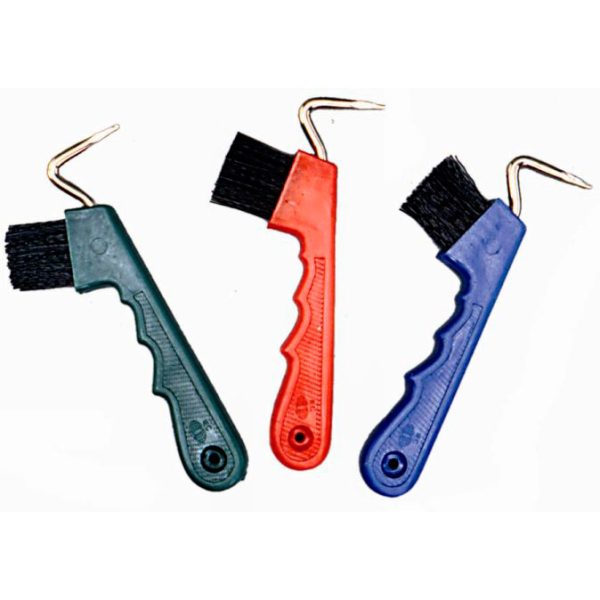
- Pick out the hooves with a hoof pick, removing debris and checking for unusual odours or signs of lameness.
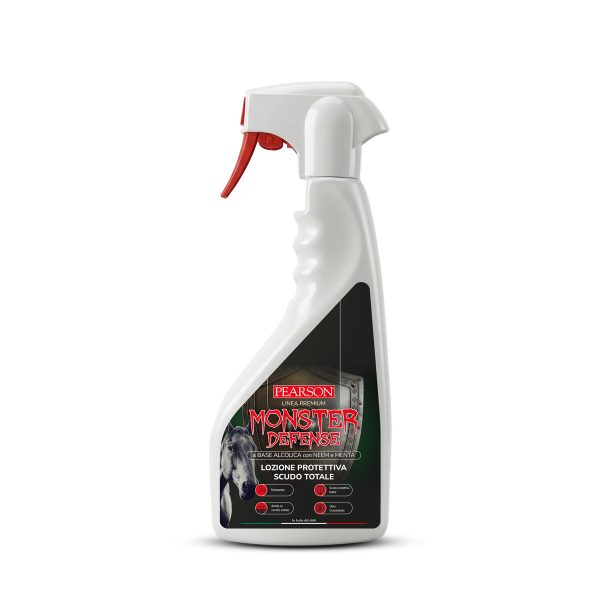
- Apply fly spray in the summer months, immediately after grooming.
Tack check
Before tacking up, tack must be clean and well cared for. It is advisable to wash it with specific products after each use and regularly oil leatherwork to keep it supple.
The basic equipment for a show jumping horse includes:
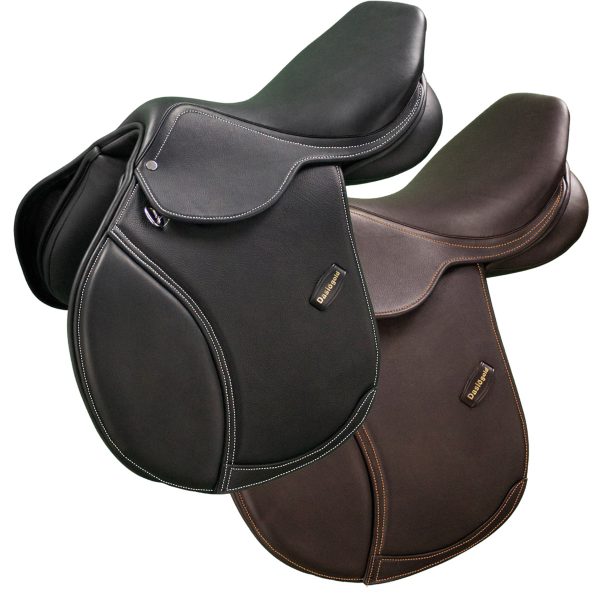
- Saddle: should fit the horse’s back properly without causing pressure points.
- Half pad: memory foam or sheepskin, to absorb shock and reduce impact.
- Saddle pad: breathable and correctly positioned; may be paired with a wither-relief gel pad to improve weight distribution.
- Girth: must be the correct size; in leather or sheepskin. On grass surfaces, a stud guard girth is recommended to protect the horse’s belly from possible knocks; however, it can also be useful on sand surfaces for horses that lift their forelegs very high and risk catching themselves.
- Bridle with bit and reins: to be chosen according to the horse’s conformation and sensitivity.
- Martingale or breastplate: optional, but often recommended in show jumping for greater stability.
- Fly mask: permitted in the warm-up arena, but must be removed before entering the competition ring.
-

Daslö Gold “Sprint” Jumping saddle
€950,00 -
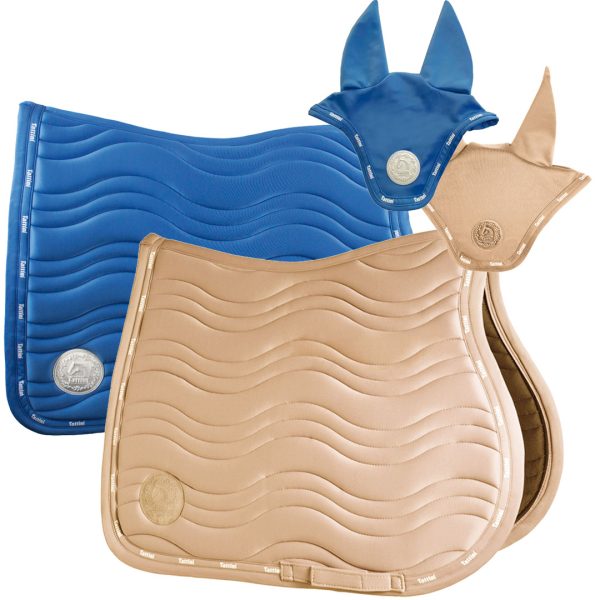
Tattini “Moma” Saddle Cloth (Limited Edition)
€89,90 -
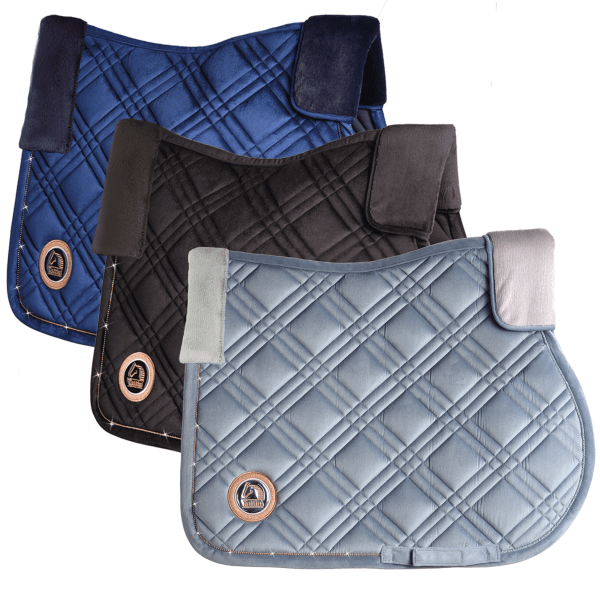
Tattini “Prado” Saddle Cloth (Limited Edition)
€89,90 -
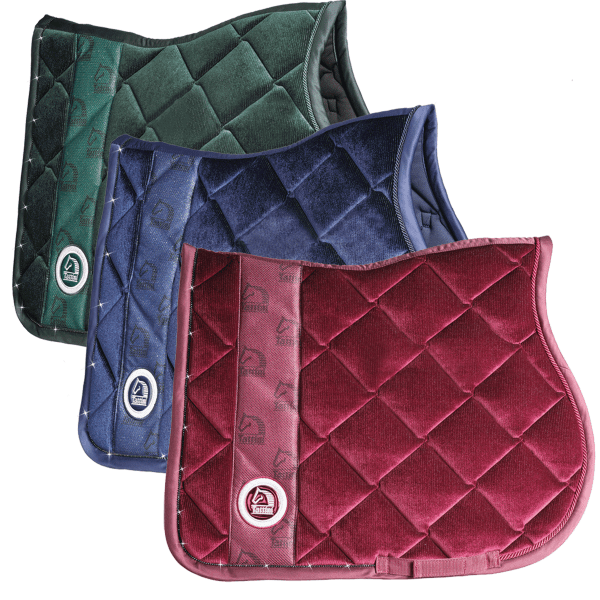
Tattini “Louvre” Saddle Cloth (Limited Edition)
€89,90 -
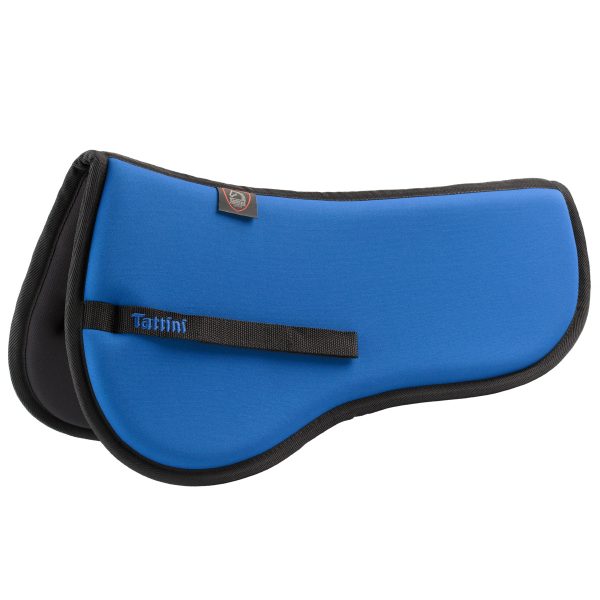
Tattini memory foam saddle pad
€105,00 -
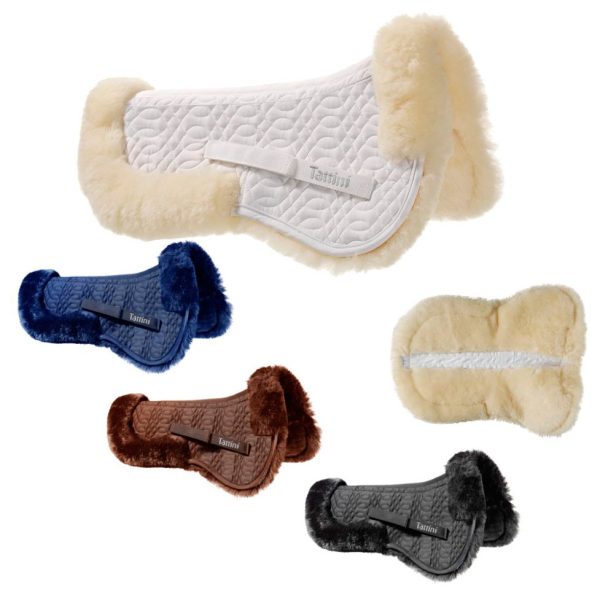
Tattini saddle pad (l)
€115,00 -

STUD GARD LEATHER GIRTH
€230,00 -

Headstall with rhinestones
€180,00
Essential leg protection
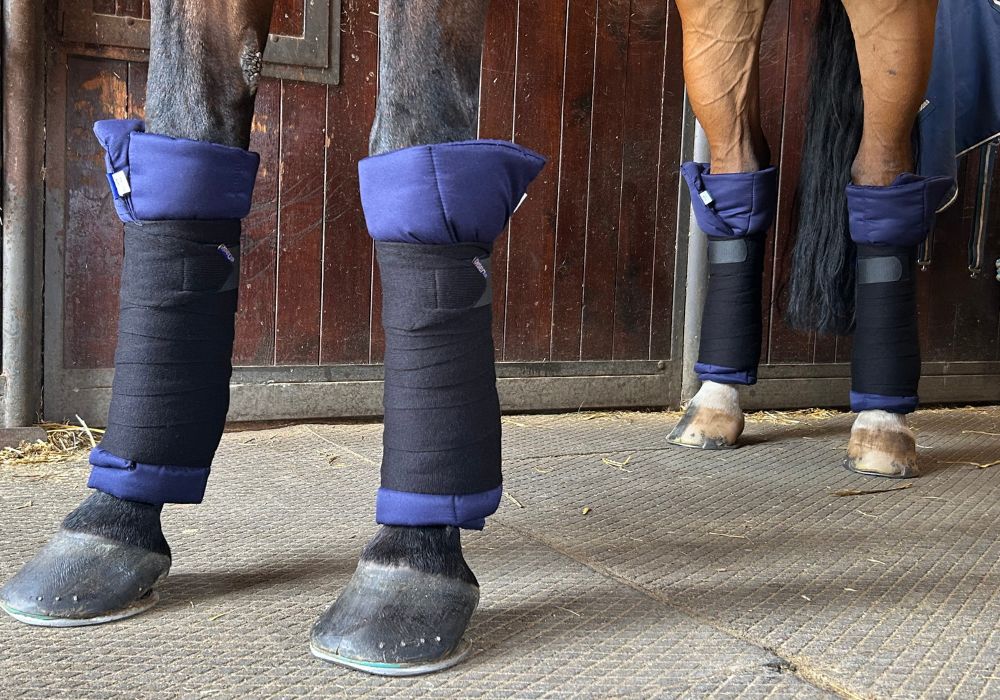
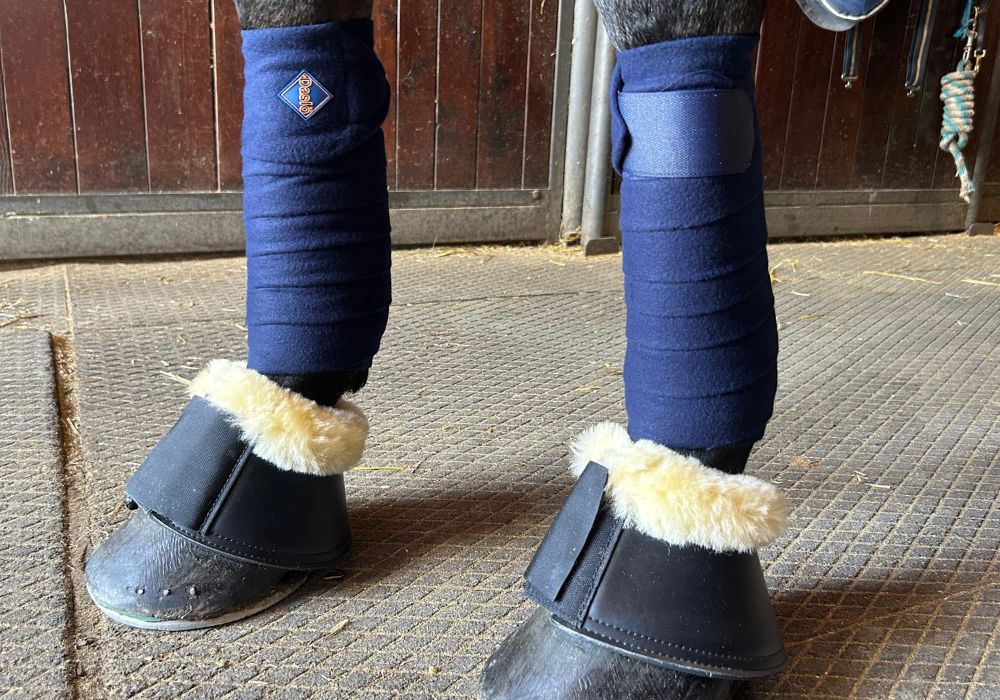
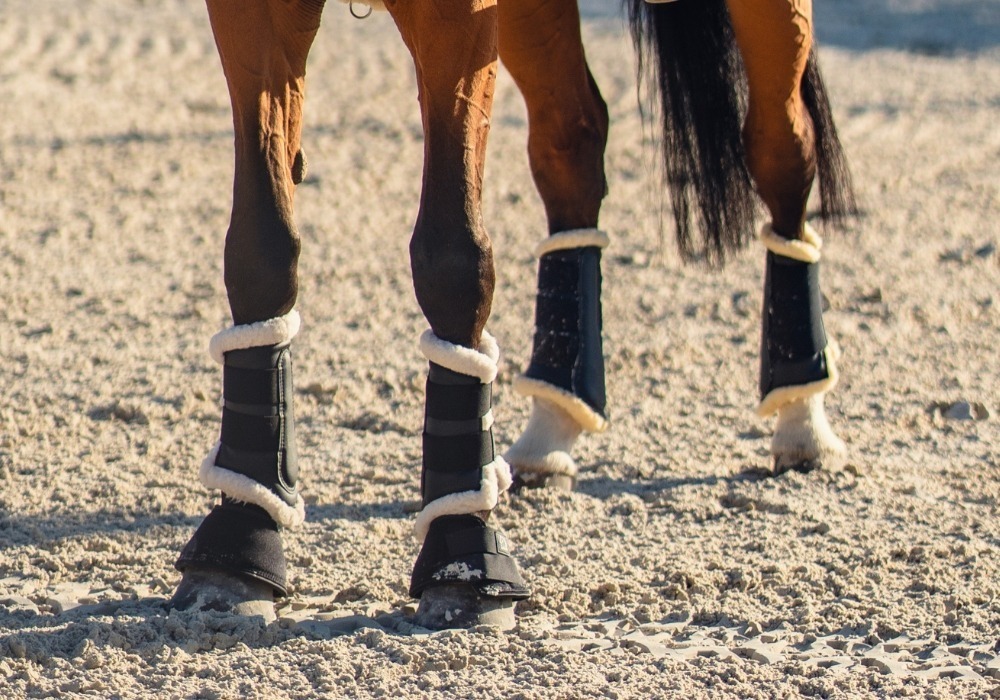
In show jumping, leg protection plays a key role in both safety and performance. Choosing the right equipment ensures protection from knocks, support for tendons and ligaments, and freedom of movement. The main types include:
- Tendon boots (front legs)
- Fetlock boots (hind legs)
- Overreach boots (bell boots)
- Stud guards
New Brad Ren’s western boots
Three styles, three different souls, one promise of comfort, quality, and style.
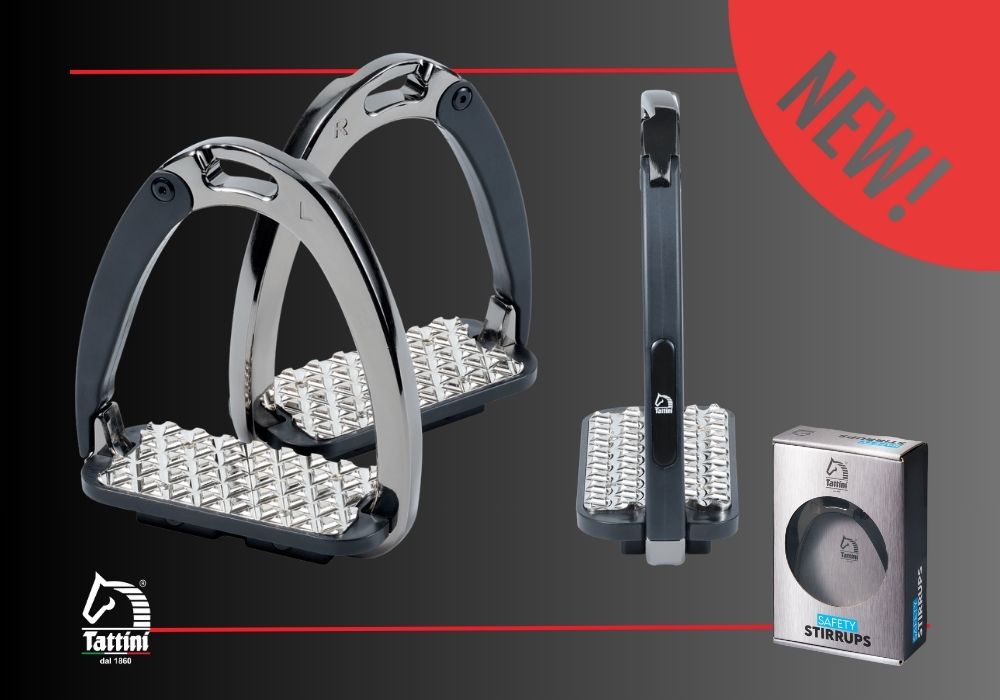
New aluminium alloy safety stirrups
Discover the new safety stirrups made from aerospace-grade aluminium alloy.
A combination of reliability and technology for the most demanding rider.
Guide to Competition Preparation – Part 1: Horse Care and Equipment
Preparing for a competition is not only about the rider’s focus and training: the horse must also be in the best possible condition to perform at its best.
In this first part of our guide, we will focus on horse care and equipment, with particular attention to the needs
Managing the horse during preparation
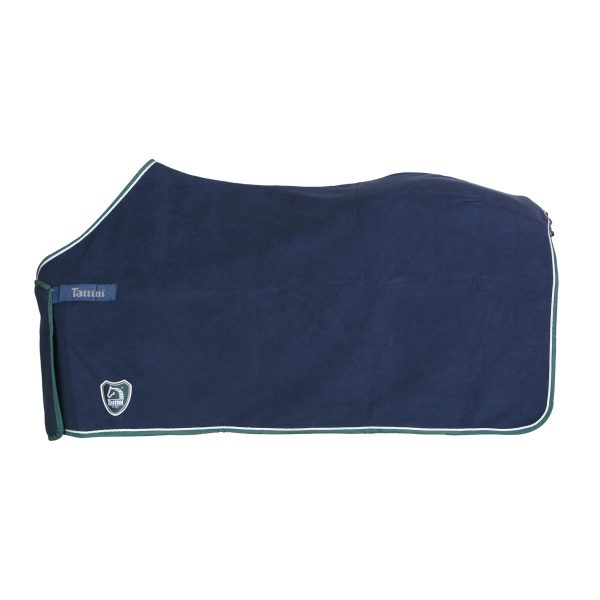
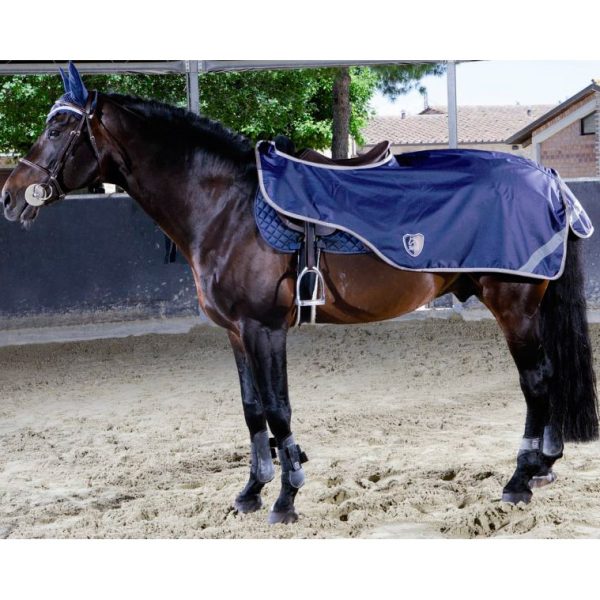
In winter, once the stable rug has been removed and the horse groomed, it is useful to cover it with a fleece or wool rug until warm-up.
If temperatures are particularly cold and the horse is clipped, a fleece exercise sheet can be used during daily work – but should be removed before entering the competition ring.
Conclusion
Preparing a horse for competition is not just a matter of appearance: it is an integral part of performance. A well-cared-for, relaxed horse with the right equipment will be ready to give its very best in the ring.
👉 Don’t miss the second part of our guide, where we will focus on rider clothing and practical advice for making the most of your competition days.